Home › Dead Rodent Removal
It usually starts as a sweet, sickly smell in one room that gets stronger for a few days, sometimes with flies appearing at a window that has no reason to have flies. A mouse or rat has died inside a wall, an attic or a floor void, and in a closed Buffalo house in heating season, that smell finds its way everywhere the warm air goes.
We locate the carcass, remove it, disinfect the spot and deal with the odor. Just as important, we figure out how the animal got in and whether others are still in there, because a dead rodent is almost always a sign of a live problem too.
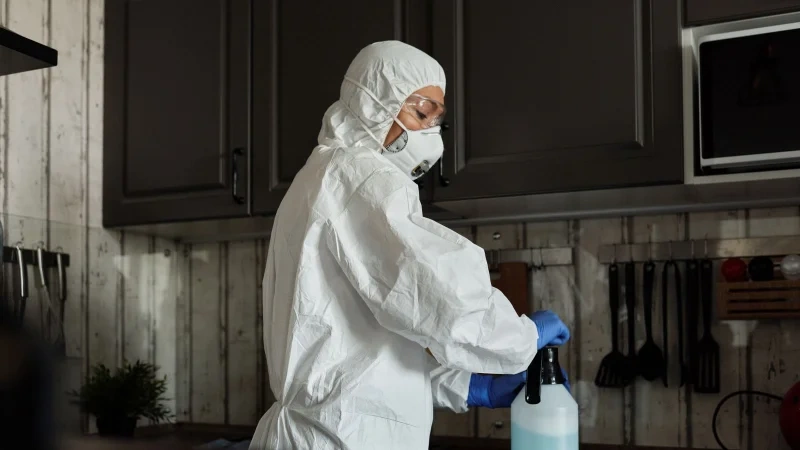
The smell is strongest near the source but warm air moves it, so the room that smells worst is not always the room with the carcass. We work from the activity map. Droppings, runways and nesting tell us where the animals travel, and in a balloon-frame house that usually means one or two wall bays and the attic or basement end of them.
Most of the time we reach the carcass from the attic, the basement, or through a small, patchable opening at the base of the right wall. Cutting drywall is the last step we try, not the first, and we will tell you before it happens if it comes to that.
The most common cause we see is poison used without a plan. A rodent eats bait, goes back into the wall to die, and the homeowner gets the smell instead of a solution. It is the main reason our mouse and rat programs lead with trapping. Old age, a snap trap that was set and forgotten, and animals that die over a winter in a vacation home account for most of the rest.
If poison was used in your house recently, tell us when you call. It changes where we look and how much activity to expect still living in the structure.
The spot gets disinfected and treated with an enzyme odor treatment. Where an animal died in insulation, the soiled section comes out with it. If the attic has a season of droppings on top of this, the attic cleanup service is the full fix rather than a spot clean.
Then the entry points get found and sealed through the exclusion service, so the next animal does not follow the same path in. Removing a carcass without sealing the route is a job we would just be doing again in a few months.
The search follows the construction. In a balloon-frame double, the animal is almost always in one of the open stud bays or at the top or bottom plate of one, and the attic and basement ends of the bay tell us which one. In a ranch or cape it is more often the attic, above the room that smells worst, or the rim joist at the basement ceiling. In a house with a finished basement, the void above the finished ceiling near a plumbing run is the usual spot. Knowing the type cuts the search from the whole house to a short list of bays and voids, which is why the first questions on the phone are about the house, not the smell.
What we need from you is the timeline: when the smell started, whether poison or traps were used recently, and which rooms are worst at which hours. Warm air moves smell on a schedule, and a smell that peaks in the evening is telling us where the heat, and the void, runs.
Finding it is most of the job, so access drives the price. A carcass reached from an open attic or an unfinished basement is a straightforward visit. One that needs a small opening cut at the base of a wall, and patched after, takes longer and is always agreed with you before anyone cuts. Size matters too: a rat is a bigger removal and a bigger cleanup than a mouse, and a void that has held more than one animal adds the disinfection and insulation work described in the cleanup section above.
Because the range depends on your house, this page does not print one. The cost page shows where dead rodent work sits in the Buffalo market, and the honest number for your address comes after we know the house type and the likely location.
Removing the carcass ends the smell once the spot is disinfected. It does not close the route the animal used, and it does not touch the live problem the dead one usually points at. A removal without sealing is a visit we expect to repeat. It also cannot promise a find in every case: a small mouse deep in a sealed void occasionally cannot be reached without demolition nobody should pay for, and when that is the situation we will tell you, treat the odor at its strongest points, and give you the realistic timeline for it to fade.
Most dead-in-the-wall calls start with a live mouse problem. This is the program that ends both.
The route the animal used is still open after removal. Sealing is what closes the story.
When the animal died in a space with a season of droppings around it, cleanup is the full reset.
A dead mouse in a wall, start to finish, if it is left alone. Most of the strength is in the first half.
A rat in a heated wall in January. Bigger animal, warmer void, longer and stronger smell.
Poison used without a plan. The animal retreats into the wall to die, and the smell replaces the problem.
Cutting drywall. Most carcasses are reached from the attic, the basement or a fixture opening first.
What to expect if you do nothing, and where removal changes it. Temperature is the wildcard in every row.
| Situation | Peak smell | Typical total |
|---|---|---|
| Mouse in a wall, heated house | Days 3 to 6 | About 1 to 2 weeks |
| Rat in a wall or floor void | Days 4 to 8 | About 2 to 3 weeks |
| Animal in a cold attic void in winter | Slower and weaker | Longer overall, because cold slows everything |
| Carcass removed and spot disinfected | Ends with the visit | Residual air clears in a few days of normal ventilation |
Typically one to three weeks depending on the size of the animal and the temperature in the wall. A mouse fades faster. A rat in a heated wall in January can be strong for two weeks or more. The smell ends when the carcass dries out, but the flies and the entry problem remain, which is why removal and sealing beat waiting.
Usually, yes. On most calls we locate it the same visit using the activity pattern and access from the attic or basement. In a small number of houses the animal is in a spot that cannot be reached without opening a wall. We will show you the evidence, explain the options, and let you decide.
The main issues are odor, flies that feed on the carcass, and bacteria at the spot itself. It is not something to handle bare-handed or to leave in a home with small children crawling near the wall base. We bag, disinfect and remove it from the property.
Yes. Commercial calls for dead animals are worked around your hours where possible, and the commercial program includes the monitoring that keeps it from becoming a pattern in food and storage areas.
A fading smell usually means the carcass is drying out, which is how the problem ends on its own. Calling still makes sense if the smell is in a business, if it is the second or third time it has happened, or if you have live signs alongside it. The dead animal is the symptom; the route it used is still open either way.
Only if the carcass cannot be reached from the attic, the basement or a fixture opening, and only after we have narrowed it to one bay and agreed it with you. Most removals never reach that step. When it does happen, the opening is small, at the base of the wall, and patchable.
A closed, heated house is the worst combination: an animal dies in a wall while nobody is there, the heating system keeps the void warm and moves the smell through the duct paths, and two weeks is exactly the peak of it. Vacation and part-time homes get the biggest version of this problem for the same reason. If it has happened once, the route the animal used is still open, and the fix that prevents the sequel is finding the carcass, disinfecting the spot, and sealing the entry, in that order.
Call now and tell us what you are seeing. We will walk you through the next step and get an inspection set up.
Sounds in the walls, droppings in the wrong place, a smell that will not air out. The inspection names the animal and the entry points before you spend anything on treatment.
Call (716) 320-8028 Request a Callback
Open 7 days, 5 AM to 11 PM · Buffalo & Erie County