Home › Mice vs Rats
People call us every week unsure which animal they have, and it matters more than most expect. Mice and rats live in different parts of a property, eat differently, fear differently and get controlled differently. This page is the side-by-side we wish every caller had read first.
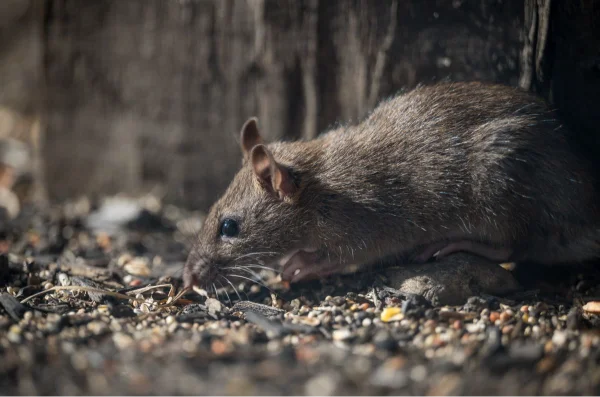
Two traps in that table for the unwary. Rat droppings from a young rat can be mouse-sized at a glance, so check the ends and whether they are grouped. And a rat seen once in an attic does happen, usually up a wall chase from a basement entry. Patterns beat single clues.
| Clue | House Mouse | Norway Rat |
|---|---|---|
| Droppings | 1/8 to 1/4 inch, rice-shaped, pointed ends | 1/2 to 3/4 inch, blunt ends, often in one latrine spot |
| Body size | 2.5 to 4 inches, plus a thin tail as long again | 7 to 9 inches, plus a thick tail slightly shorter than the body |
| Ears and eyes | Large ears, prominent eyes for its size | Small ears close to the head, small eyes |
| Where it lives | Inside the structure: walls, attics, kitchens | Mostly outside in burrows, commuting in to feed |
| Entry gap needed | About 1/4 inch, the size of a dime | About 1/2 inch, and will gnaw smaller holes bigger |
| Food habits | Nibbles many spots, loves seeds and grains | Eats bigger meals in one place, wary of new food and traps |
| Signs outside | Few, maybe tracks in dust or snow | Burrows, runways, rub marks at ground level |
Every established rat in Buffalo and Western New York is the Norway rat, also called the brown rat or sewer rat. Roof rats, the climbing species common in the South, are not established in New York. That fact simplifies your life. Your rat lives at ground level, digs burrows, travels sewers and creek banks, and enters houses at the foundation, not the roofline. Any company that tries to sell you a roof rat program in Buffalo is selling you a story.
Mouse work is an indoor program: traps on wall and attic runs, then sealing dime-sized gaps, described on the mouse control page. Rat work starts outdoors with burrows, stations and food sources, and seals at ground level, described on the rat control page. Rats are also far more trap-shy than mice. A new trap or station can be avoided for days while the rats test it, which is why rat programs pre-bait and run longer. Book the wrong program and you get the frustrating result everyone complains about: money spent, animals still there.
Daytime noise in a chimney or soffit is usually a squirrel. Runways and tunnels in the lawn are voles. Surface ridges and dirt mounds are moles, which are not rodents at all. A proper inspection sorts species before a single trap is set, which is the entire point of starting there.
Yes, and Buffalo houses near creeks and sewers do. Mice inside the structure, rats in the yard and basement edges is a common combination. The programs run together, with the inspection mapping each species separately.
Young rats have oversized heads and feet for their bodies, which is the giveaway against an adult mouse of similar length. If you are looking at a photo and guessing, send the situation to us by phone description instead. Droppings near the sighting settle it more reliably than the animal itself.
Call now and tell us what you are seeing. We will walk you through the next step and get an inspection set up.
Sounds in the walls, droppings in the wrong place, a smell that will not air out. The inspection names the animal and the entry points before you spend anything on treatment.
Call (716) 320-8028 Request a Callback
Open 7 days, 5 AM to 11 PM · Buffalo & Erie County